Your cart is currently empty!
Checkout is not available whilst your cart is empty—please take a look through our store and come back when you're ready to place an order.


Your car is used every day, so it inevitably collects dust, mud, insects, stains, and even small bits of debris.
But do you really need to visit a professional car wash every time?
Not necessarily.
With a little planning, the right products, and the proper cleaning routine, you can wash your car yourself, save money, and give every surface the care it actually needs.
So, let’s take a look at how to clean your car inside and out, while avoiding unnecessary purchases and keeping the entire process as simple as possible.
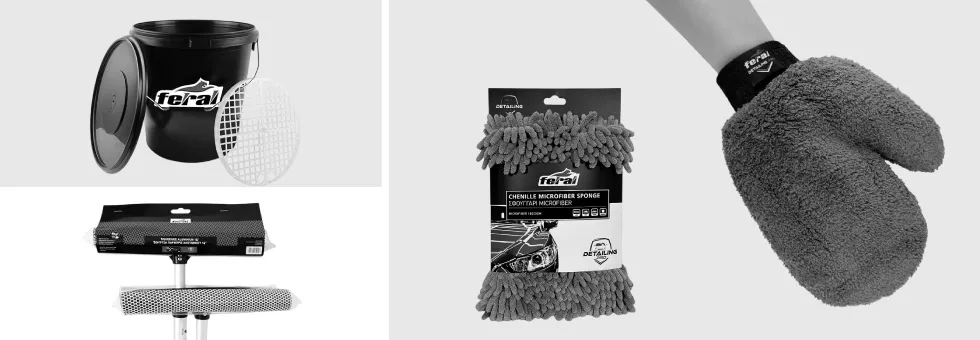
Before you get started, gather all the essential equipment in one place. You don’t need dozens of different products. What matters most is choosing the right products for your car’s exterior and using the appropriate cleaning tools depending on the surface and how dirty it is.
If you want to keep costs down, start with the essentials: car shampoo, a bucket, a wash mitt, and a microfibre towel. You can then add more specialised products over time, depending on how often you clean your car and its specific needs.
You may also be interested in: Which Car Covers Should I Choose? A Complete Guide to Making the Right Choice
To wash your car properly at home, you don’t necessarily need professional-grade equipment or professional car cleaning products. With the right products, a few essential accessories, and the proper cleaning routine, you can achieve excellent results on your own. The key is to start with the heaviest dirt and grime, then gradually move on to the more delicate surfaces.

Choose a shaded area and make sure the car’s bodywork is not hot to the touch. Then, rinse the vehicle thoroughly with plenty of water to remove dirt, dust, and loose debris. Why is this important? If you start scrubbing a heavily dust-covered car straight away, dirt particles can be dragged across the paintwork. A thorough pre-rinse helps minimise this risk.
The front of the car, side mirrors, and windscreen often require a little extra attention. Avoid trying to remove dried-on residue by scrubbing aggressively. Instead, use a suitable product designed for the specific type of contamination, allow it to work according to the manufacturer’s instructions, and then remove the residue gently.
The wheels are among the dirtiest areas of a car, so it’s best to clean them before moving on to the bodywork. Spray on a suitable wheel cleaner, use a brush to clean between the spokes, and work on hard-to-reach areas without using the same tools that will later come into contact with the paintwork.
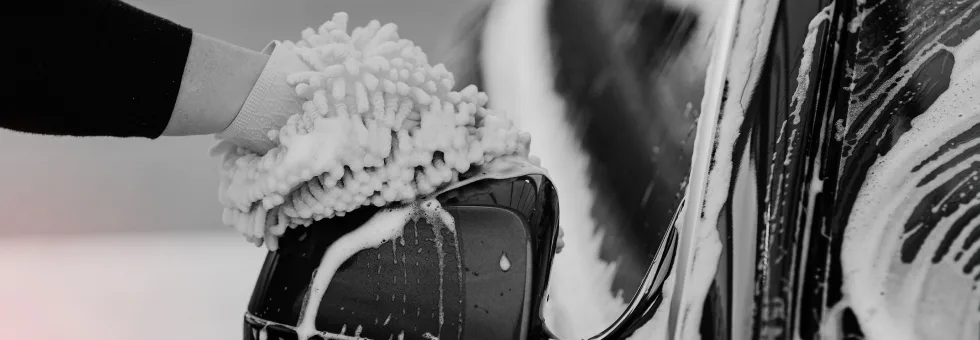
Now you can move on to the main wash. Start with the roof and gradually work your way down to the bonnet, windows, doors, and lower sections of the vehicle, where more dirt tends to accumulate. Rinse your wash mitt or sponge regularly, and avoid applying excessive pressure to stubborn stains. The right cleaning product should do most of the work for you.
Clean windows don’t just improve the appearance of your car; they also contribute to safer driving by providing better visibility, particularly when driving towards the sun or at night. Use a clean microfibre cloth and wipe each glass surface thoroughly until haze, fingerprints, and residue have been removed.
Rinse away all traces of shampoo thoroughly, and don’t simply leave the car to air-dry in direct sunlight. Instead, use a large, absorbent microfibre drying towel and work one section at a time. This helps minimise water spots that can form as droplets evaporate.
If you have a little extra time, you can complete the process after drying by applying a wax or suitable paint protection product for added care and shine. There’s no need to use an excessive amount. Follow the product’s application instructions and always work on a clean, dry surface. Waxing is an optional finishing step that can be added to your car care routine after washing.
Read also: Snow Chains or Snow Socks: Which Should I Choose for My Vehicle and Driving Needs?
Cleaning the interior requires a different approach. Unlike the exterior, the cabin contains a variety of materials, including fabric, leather, plastic, carpet, and glass. So, if you’re looking for the best car cleaning products, there isn’t one single product that does it all. The key is choosing the right cleaner for each material and surface.
It pays to be selective when choosing products for your car’s interior. Always check the manufacturer’s instructions and, particularly when cleaning leather or other delicate materials, test the product on a small, inconspicuous area first. Once you’ve finished cleaning, you can also add one of our car air fresheners to give the cabin a fresher, more pleasant feel.
Proper car care isn’t just about checking fluids and using the right antifreeze products. Keeping the cabin clean is just as important. Following the right order can make the entire cleaning process easier, faster, and more effective.

Before using any cleaning products, clear out the cabin completely. Remove bottles, papers, and personal belongings, empty the storage compartments, and carefully take out the floor mats. This will give you better access to the interior and make it easier to identify the areas that need the most attention.
Start from the higher areas of the cabin and leave the floor until last. Vacuum thoroughly around seat seams, rails, and underneath the seats. A narrow crevice attachment is particularly useful for reaching between the seats and around the centre console.
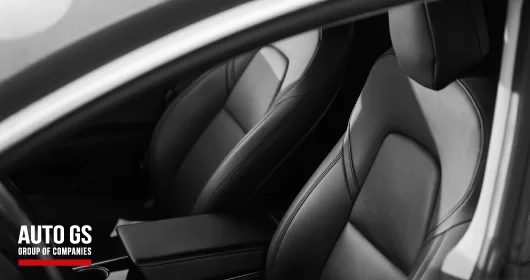
For fabric seats, focus on stains without soaking the upholstery. For leather seats, use a dedicated leather cleaner and a soft cloth. It’s important to treat each material differently, as fabric and leather respond differently to moisture and cleaning products.
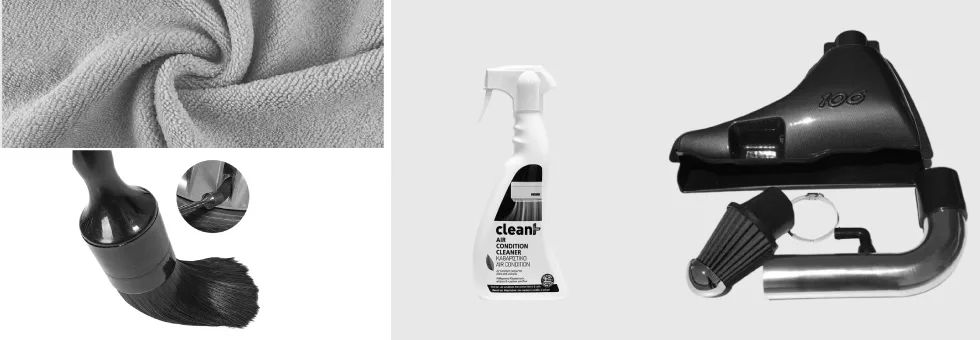
Start by removing dust with a dry or slightly damp microfibre cloth. Use a soft detailing brush for buttons, joints, and narrow crevices. Then, apply a suitable cleaning product to the cloth rather than spraying it freely over the entire surface. Avoid products that could leave the steering wheel or pedals slippery.
Don’t overlook door handles, cup holders, switches, and interior door panels. These areas are touched frequently and tend to collect dust, dirt, and greasy residue. A clean microfibre cloth and a small detailing brush are usually all you need for most of these areas.
The inside of your windscreen may look clean until bright light hits it. Use a separate microfibre cloth to avoid transferring residue from dashboard care products onto the glass. Remember to clean the side windows as well, including their upper edges.
Fine dust can easily build up on the slats of the air vents. Clean them with a dedicated soft brush and, if you use an A/C cleaner, carefully follow the instructions provided with the specific product. Dedicated air vent brushes and air-conditioning cleaning products are available specifically for these areas.
You may also be interested in: Which Windscreen Wipers Should I Choose? Tips for Making the Right Choice
Even with the right products, certain mistakes can affect the final result or even damage your car’s surfaces. Before you get started, it’s worth knowing the most common mistakes to avoid:
Paying attention to these simple points can make your cleaning routine more effective and, most importantly, safer for your car. There’s no need to rush—the right cleaning order and the proper use of each product will ultimately make the biggest difference.

Even with the right products, certain mistakes can affect the final result or even damage your car’s surfaces. Before you get started, it’s worth knowing the most common mistakes to avoid:
Paying attention to these simple points can make your cleaning routine more effective and, most importantly, safer for your car. There’s no need to rush—the right cleaning order and the proper use of each product will ultimately make the biggest difference.
Stay up to date with the latest news and offers from us!

We invite you to join us at Automechanika Frankfurt 2026, the leading meeting place for professionals in the automotive aftermarket industry, taking place from 8–12 September 2026. 📍 Find us at Hall 3.1 – Stand F64 📧 Contact us at sales@feral.gr to arrange a personal meeting with our team!
Learn which car covers to choose for protection, comfort, and style. Explore materials, types, and solutions for seats and steering wheels at Auto GS, with options for every vehicle.